realyyz’s note:
Chinese is one of the most widely spoken languages in the world, and by rights it should produce great writers and public commentators in abundance. In practice, though, those people are nearly invisible to readers outside the Chinese-speaking world; even within the Chinese internet, independent writers who can actually reach ordinary readers are vanishingly rare. Overseas platforms are inaccessible without special tools, the domestic content ecosystem is self-contained, most people have limited English and little interest in public affairs, and so Chinese bloggers go unseen — whether you’re looking from inside or outside the Chinese-speaking world.
Program-Think is one of the rare exceptions, and probably the most influential enlightenment-style blogger in the Simplified Chinese world. That “most influential” is not a figure of speech: among 1.4 billion people, you won’t find a second person who has done the same thing. He rarely tells readers what to believe; instead he models how to judge, how to question, how to identify logical fallacies and cognitive biases. For Chinese readers who care about public affairs and have the opportunity and willingness to access platforms outside China, this blog is inescapable and completely irreplaceable: there was nothing like it before him, and after he went silent (the bastard got arrested), that spot has stayed empty ever since. Many people describe having their entire worldview shattered and rebuilt by this blog. This post is among his most representative: it discusses no specific political event, but uses a psychological framework to explain why the human brain naturally tends to route around thinking and stay in its Comfort Zone — and why independent thinking is a capacity that requires long-term training and carries real cognitive costs.
The reception this article received is itself a perfect footnote. Some patriotic Chinese netizens, having perhaps not finished it and certainly unable to point to any specific error, were quite sure: this article is bad, it shouldn’t be read, and ideally nobody else should read it either. Anyone is of course free to disagree with an article; but rushing to reject something before you’ve understood it means you may not be opposing the article at all — you may just be reacting to the discomfort that independent thinking produces.
This is not a uniquely local phenomenon. It’s the factory setting of the human brain, and the political polarization in Western societies is another exhibit: most people pick their team first and find their reasons second. During the pandemic in the United States, mask-wearing — a public-health question — became a political identity marker. Judging an argument by asking “who said it?” rather than “is it right?” is the same mental shortcut as “the blogger’s politics are suspect, so the article must be entirely wrong.” This piece is written for everyone.
One last note: I’m genuinely patriotic. Reposting does not mean I endorse every view in the article. As for which ones I disagree with and why — read it first, then feel free to guess.
Abstract
Most people know that “independent thinking” matters, yet most of the time most people can’t actually do it — not because of weak willpower, but because there are deep psychological reasons why.
The core framework here is the dual-process theory of “System 1 vs. System 2”: System 1 operates unconsciously, rapidly, and by relying on fixed patterns — it is our psychological Comfort Zone; System 2 operates consciously, slowly, and at enormous cognitive cost — it is the only road to genuine independent thinking. Precisely because of this, the brain naturally tends to route around System 2 — laziness, the least-effort principle, and Comfort Zone addiction together form the resistance to independent thinking.
The article also maps out a minefield of System 1 “cognitive fallacies”: what you see is what there is, overgeneralization, the anchoring effect, loss aversion… Once these biases become hardwired into System 1, even professionals in their own fields can’t easily escape them.
Finally, three paths to improving your thinking are offered: continuously exercise System 2 through reading and cross-domain learning; choose books over passive media (audiobooks, video, fragmented information) to keep cognition active; and harness interest and the Flow mechanism so that Dopamine helps you absorb cognitive load, creating a virtuous positive-feedback loop.
Reposted from: Program-Think’s Blog · compiled and reposted by realyyz
Posts related to “psychology” were sparse last year (2018). Nudged by an enthusiastic reader in the comments, I’m finally putting one out today.
In ten years of blogging, I’ve written quite a few posts touching on psychology, and in many of them I’ve brought up the importance of independent thinking. I’ve stressed it explicitly: “Independence” is a prerequisite for “freedom” — without independent thinking there is no freedom of thought.
Plenty of people know they should think independently, yet most of them, most of the time, are simply unable to do so. So today’s post is about exactly that.
★ What Makes This Post Different from “Self-Help / Motivational / Inspirational” Articles
◇ Legitimate Psychology VS Pseudo-Psychology
The internet is awash in unreliable psychology content, and the self-help / motivational / chicken-soup genre is the worst of the bunch. I wrote a critique of the self-help industry years ago: Critique of Success Theory — On Its Harms and Fallacies. In that post I laid out the errors of pseudo-psychology.
How do you spot pseudo-psychology? I’ve shared a fairly accessible book on my cloud drive: How to Think Straight About Psychology (another Chinese translation is titled Different: A Psychology for the Rest of Us). If you want to understand the difference between legitimate and pseudo-psychology, it’s a great introductory read.
The author, Keith Stanovich, is a top-tier psychologist (I’ll mention him again later in this post).
◇ The Psychology Books Cited Here — All by Professional Psychologists
The vast majority of what I discuss below is not my personal opinion; it comes from the research of professional psychologists and is backed by corresponding psychological experiments.
To keep this post credible, every psychology book I cite was written by a professional psychologist.
One book will be quoted repeatedly: Thinking, Fast and Slow (Thinking, Fast and Slow). Let me introduce it briefly here.
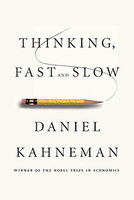

Its author, Daniel Kahneman, is a world-class psychologist and the 2002 Nobel Prize in Economics laureate. Some readers may wonder why a psychologist won an economics prize — because his contributions to psychology profoundly influenced behavioral economics.
Although the author is an academic, the book is quite accessible. In other words, you don’t need a heavy background in theory to read it straight through.
◇ E-book Downloads
In addition to Thinking, Fast and Slow, later sections of this post will mention many other books (both psychology and non-psychology titles), most of which I’ve shared to my cloud drive.
To download the e-book editions, click the link below to open the e-book list:
https://github.com/programthink/books
★ The Brain’s Two Systems (Two Operating Modes)
The first thing I want to talk about is “the brain’s two operating modes” — the central thread running through Thinking, Fast and Slow.
◇ “Face Recognition” VS “Arithmetic”
The opening of Thinking, Fast and Slow (Chapter 1) is titled: An Angry Face and a Multiplication Problem. Both are classic examples; I’ll borrow them directly.
Example 1: Show someone a photo of a face and virtually everyone can tell you the expression within a second; they can also tell you in a second whether the face belongs to someone they know.
Example 2: Give someone a random two-digit multiplication problem. Unless they’ve been specially trained or are a mental-arithmetic prodigy, virtually no one can produce the answer in one or two seconds.
Of these two scenarios, the first is clearly harder and the second easier. As a (former) software developer, I can tell you with confidence: if you had to write a program to solve both, the face-recognition program would be incomparably more complex — several orders of magnitude beyond the multiplication one. Even setting aside computer programming and looking at it purely from an information-theory perspective, face recognition involves vastly more information than two-digit arithmetic.
So the puzzle is: why can our brains handle something relatively complex like face recognition effortlessly and instantly, yet struggle slowly and laboriously with something relatively simple like two-digit multiplication?
◇ The Brain’s “System 1” and “System 2”
That question isn’t easy to answer. Over the past few decades, thanks to rapid advances in psychology and neuroscience, we’ve begun to understand the mystery. The key is that the brain has two fundamentally different processing mechanisms. Psychologists call them “System 1” and “System 2.”
System 1 solves problems very quickly, but it can only handle a narrow range of problem types; problems that System 1 can’t handle get handed off to System 2. System 2 can handle a much broader range of problems, but it operates very slowly and with great effort compared to System 1.
System 1 can handle face recognition but is unable to handle complex arithmetic.
Incidentally, psychologist Keith Stanovich was the first to introduce the terms “System 1 / System 2.” He’s the same person who wrote How to Think Straight About Psychology, mentioned at the start of this post.
◇ Scientific Experimental Evidence for “Two Systems”
The brain’s two operating mechanisms are not merely theoretical conjecture. In psychology and neuroscience, a substantial body of experimental evidence demonstrates that the brain operates in two fundamentally different modes.
Psychologist Eckhard Hess pointed out that pupil dilation can reveal which operating mode the brain is in (note: Chapter 2 of Thinking, Fast and Slow is devoted to this topic).
Beyond pupil observation, other physical methods — such as functional magnetic resonance imaging (fMRI) — can monitor active regions of the brain, showing that different areas of the cortex become active depending on which system is at work.
★ The Division of Labor Between the Two Systems
◇ What Can “System 1” Do?
As mentioned, System 1 can only handle a narrow range of problem types. What are its areas of strength? Here’s a short sample list (illustrative, not exhaustive):
Face recognition, expression recognition; Seeing certain animals (snakes, spiders, centipedes) and feeling fear or disgust; Hearing a piece of music you know and instantly recalling its name; When you’re cycling or driving and a sudden obstacle appears, reacting instantly; (For literate people) seeing a word and immediately knowing how to pronounce it; (For experienced Go players) seeing a board position and immediately recognizing it as “such-and-such joseki”; …
◇ What Is System 1 Unable to Do? (Must Hand Off to System 2)
System 1’s domain is fairly narrow; most kinds of problems must be handled by System 2 (illustrative, not exhaustive):
Complex arithmetic; Logical reasoning; Playing a game (especially one you’re not familiar with); Answering an interviewer’s questions (especially a tough one); Understanding academic papers (especially the dense, difficult kind); Creative work (writing, composing, painting, programming…); …
★ The Differences Between the Two Systems
Let’s first look at the differences (surface features) between the two systems, then explore the mechanisms (underlying nature).
◇ Unconscious VS Conscious
The things System 1 excels at are usually unconscious activities; the things System 1 cannot handle (leaving them to System 2) are usually conscious activities that require sustained focused attention over a period of time.
◇ Energy-saving VS Energy-consuming
For System 2 to complete a task, it must maintain focused attention. The harder the task, the higher the concentration required. Maintaining that level of concentration demands willpower. Sustaining willpower over a long period consumes energy.
Note: the energy referred to here is energy in the physical sense; physiologically it shows up as blood glucose levels (concentration of glucose in the blood).
The link between attention/willpower and energy expenditure has been established by many professional psychology books and experiments. In addition to Thinking, Fast and Slow, psychologist Roy Baumeister wrote an entire book on the topic called Willpower, which covers this in detail.
To keep this post manageable, I’ll just sketch a few experiments:
Experiment 1
Two groups of participants: one does a light mental task, the other does a complex mental task. Afterwards, both groups are offered free snacks. The group that did the complex task had a higher proportion choosing sweet snacks, and their blood glucose levels were also lower than the other group.
Experiment 2
Two groups: one hungry, one normally fed. Both do the same complex mental task. The hungry group’s average scores were significantly lower than the normal group.
Experiment 3
Two groups: one hungry, one normally fed. Both attempt an impossible task, and the question is how long each group persists before giving up. The hungry group’s average duration was significantly lower than the normal group.
These experiments reflect:
- Engaging System 2 in complex tasks significantly lowers blood glucose levels.
- Blood glucose levels significantly affect System 2’s efficiency and capacity for complex tasks.
- Blood glucose levels significantly affect willpower and self-control.
◇ Further Discussion of “Willpower / Self-Control” — a Precious Resource
Falling blood glucose reduces willpower. But once your willpower is fully depleted, immediately eating to restore blood glucose does not immediately bring willpower back to its peak — recovery is a gradual process.
Beyond blood glucose, many other factors affect willpower: being in a bad mood makes it easier to give up on a hard task; sleep deprivation or being drunk also reduce willpower.
From all of this, it should be clear: willpower is a precious resource. This point is important — please keep it in mind! (I’ll come back to it later.)
◇ Fast Startup VS Slow Startup
System 1 starts up extremely fast. When an obstacle appears suddenly, System 1 responds within a second — sometimes fractions of a second.
System 2 starts up very slowly by comparison. You often hear the phrase “getting into the zone” — that phrase describes System 2 perfectly.
How long System 2 takes to “get into the zone” also depends on the complexity of the task. For a simple task, getting into the zone is relatively quick; for a very complex task, getting in takes longer. Think of it as: to tackle something complex, System 2 needs to reach a kind of full operating load.
◇ Multi-tasking VS Single-tasking
System 1 is a classic multi-tasking system.
Someone who can ride a bicycle fluently: while pedaling, if they hear a familiar song, their mind immediately supplies the title — all while maintaining their balance. System 1 is handling both tasks simultaneously, and they don’t interfere with each other.
System 2 is a classic single-tasking system.
By contrast, System 2 can only handle one task at any given moment. If you try to run two complex tasks through System 2 at once, at least one will go wrong (usually both). This has also been confirmed by psychological experiments.
I can anticipate some readers objecting: what about circus acrobats performing multiple complex tasks simultaneously? Simple answer: through years of training, acrobats have converted those complex tasks into System 1 fixed patterns. So while it looks like they’re doing multiple complex things at once, at most one task (possibly none) is actually occupying System 2.
◇ Relaxed VS Strained
System 2’s operation requires a high level of concentrated attention — you have to apply willpower to sustain it — and throughout that process, your willpower steadily depletes. Experiments by psychologist Roy Baumeister show this process feels unpleasant and exhausting. Thinking, Fast and Slow calls it cognitive load.
System 1’s activity, by contrast, is unconscious — no focused attention required, so there’s no cognitive load.
Given these differences, we can think of the two systems as “relaxed” and “strained.” The “relaxed System 1” is what I’ve often called the Comfort Zone in this blog.
Some readers will ask: is it possible to engage System 2 while escaping cognitive load? Fortunately, having your cake and eating it too is actually achievable! (I’ll discuss this when I introduce “Flow” near the end of the post.)
◇ The Psychology Experiment on Cognitive Load
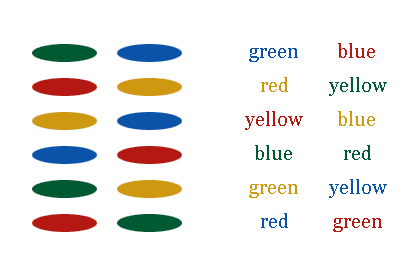
An Israeli-American psychologist conducted the famous “Stroop Effect” experiment:
For the left condition, you name the color of each oval in sequence — easy — only System 1 is engaged.
For the right condition, you name the color in which each word is printed (not what the word says) — hard — because the word’s meaning conflicts with its color, you must use willpower to inhibit System 1’s automatic response while invoking System 2 to follow the given rule. This creates mental tension and strain.
The cognitive load described above has been confirmed by MRI (magnetic resonance imaging).
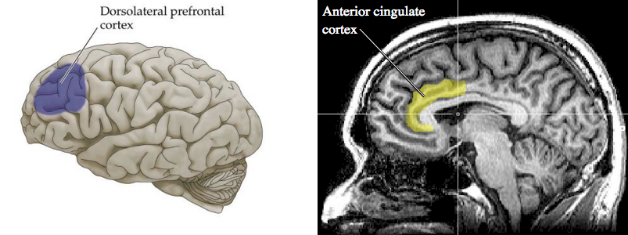
(Note: the above example comes from a Stanford University article on neuroscience, available here.)
★ Misconceptions About the Two Systems
(After this post was published, discussions with readers revealed that some people read ambiguous meanings into “System 1 / System 2,” so I’m adding this section.)
◇ Misconception 1: Equating “System 1 & System 2” with “Emotion & Reason”
This misconception is very common. One reason the term “System 1” was chosen rather than “emotional system” or some other label was precisely to avoid this confusion. Similarly, it’s wrong to reduce “System 1 & System 2” to “intuition system & reasoning system.”
◇ Misconception 2: Treating “System 1 & System 2” as two hierarchical levels
The two systems are not in a simple hierarchical relationship. The relationship between them is far more complex and is still being researched.
◇ Misconception 3: Treating “System 1 & System 2” as a simple dependency — thinking “System 2 depends on System 1”
We cannot yet assert that the relationship between the two is a simple dependency.
◇ Misconception 4: Treating “System 1 & System 2” as two physical parts of the brain
System 1 and System 2 do activate different cortical regions, which can easily mislead readers into thinking each system corresponds to a separate physical location in the brain.
In reality it’s not that simple. A given brain region might be used by both systems; it might be highly active during one system’s operation and less active during the other’s.
Because of this misunderstanding, some psychologists have switched to alternative terminology — “Type 1 processing” and “Type 2 processing.” I think that phrasing is more accurate. But since “System 1 & System 2” is already so widely used, I’ll stick with the original terms in this post.
★ How “System 1” Operates
◇ System 1 Operates on Patterns
Go back and review the list of things System 1 can do from the earlier section. You’ll notice all of them can be crystallized into some kind of pattern.
To make the idea of System 1 patterns concrete, let’s return to multiplication.
Most people can say 3 × 3 = 9 within one second, but most people cannot say 19 × 21 = ? within one second.
Same operation, why such a difference? Because 3 × 3 = 9 is included in the multiplication table. That multiplication table is what I mean by a fixed pattern. Through such a fixed pattern, an external stimulus (input) can directly find a matching entry in the pattern and produce a brain response (output).
Why a Go master can immediately recognize “this board position is such-and-such joseki” is the same logic — through thousands of games and problem sets, common patterns have become fixed patterns in their minds.
◇ Innate Patterns (A Priori) VS Learned Patterns (Empirical)
Some of System 1’s patterns are innate (present from birth); others are acquired (learned through experience).
“Recognizing Go joseki” is obviously learned through reinforcement; “reading facial expressions” is innate — some newborn babies’ moods are already influenced by their parents’ facial expressions.
As a philosophical aside: in epistemology, “present from birth” is also called “a priori”; “learned through experience” is called “empirical.”
◇ Why Do Innate Patterns Exist? — An Evolutionary Psychology Explanation
Because the human evolutionary process involved a very long stretch in primitive society — from Australopithecus through Homo sapiens, each stage spanning hundreds of thousands to millions of years — while human civilization is relatively short (only a few thousand years). A few thousand years is not enough for the brain to evolve significantly. So our brains are, in effect, still stuck at the primitive-society stage.
Why is the brain so good at face recognition? Because in primitive society, members of the same tribe needed to cooperate while different tribes often clashed. So quickly judging whether a face belongs to a familiar person or a stranger — and whether its expression is happy or angry — was a critically important survival skill. Individuals lacking that skill were less likely to survive (more easily eliminated); individuals with it were more likely to survive (their genes more likely to be passed on).
By the same logic — primitive society simply had no need for two-digit multiplication, so System 1 never developed (evolved) that capacity.
Further reading: Evolutionary Psychology: The New Science of the Mind
◇ What Cognitive Fallacies Can System 1 Produce?
Thinking, Fast and Slow discusses many cognitive fallacies caused by System 1. Here’s a sample:
What you see is what there is Things you “witnessed yourself” leave deeper, more lasting impressions; things you didn’t witness are comparatively easy to overlook.
Overgeneralization Individual cases (especially ones you’ve seen personally) are given more weight; statistical data tends to be ignored. “Statistics” are too abstract, while incidents that happen right in front of you are amplified by “what you see is what there is.”
The Halo Effect This one is fairly well known.
Prospect Theory We perceive change more sharply than we perceive state. (Think of the “frog in slowly heating water” story.)
Loss Aversion The pain of losing something far outweighs the pleasure of gaining the same thing.
Probability Misjudgment System 1 is extremely bad at probability. It frequently overestimates the probability of favorable events and underestimates the probability of unfavorable ones. (This is one reason programmers’ project-deadline estimates are almost always too optimistic.)
The Anchoring Effect Most people are not familiar with this one. I’ll use it as an example shortly.
Spurious Causation System 1 constantly tries to find causal links between unrelated things. For example, conspiracy theories are closely related to this fallacy.
(Obviously, the above is only a small selection.)
◇ Further Reading
Cognitive fallacies are frequently exploited for brainwashing. Related primer posts:
- Debunking Logical Fallacies — Using Wu Mao Rhetoric as Negative Examples
- Brainwashing More Effective Than “Deception” — Thought Control Based on Doublethink
- Brainwashing More Cunning Than “Deception” — Manipulating with Real Data
- On Brainwashing and Brain-deadness — Analyzing the Origins and Awakening of Brain-deadness
- How to Use the Internet for Counter-Brainwashing and Political Enlightenment — Sharing Personal Experience
I’ve also shared The Art of Thinking Clearly / The Art of Acting Wisely on my cloud drive — it catalogues a wide range of cognitive fallacies (original English title: The Art of Thinking Clearly).
★ How “System 2” Operates
Research on System 2 is still insufficient, and many of its internal mechanisms are not yet fully understood. In this section I’ll cover only a few important, well-established points.
◇ System 2 Has Severe Laziness
On this point, I’ll quote Kahneman directly from Thinking, Fast and Slow:
System 2’s hallmark is that its operations are effortful, and one of its main characteristics is laziness, a reluctance to invest more effort than is strictly necessary.
◇ Why Such Severe Laziness?
Throughout the long stretch of primitive society — through hunting, gathering, and eventually agriculture — food was severely scarce. Even after agriculture emerged, it was far from abundant. And System 2 is a massive energy consumer. This creates a sharp conflict between food scarcity and System 2’s energy demands. The solutions included:
- Tasks that come up repeatedly should, as much as possible, be handled by System 1.
- Even when a task is beyond System 1 and System 2 must be invoked, System 2 should be used sparingly.
◇ Intelligence Factor VS Rationality Factor
Psychologist Keith Stanovich, in his book Rationality and the Reflective Mind, took a closer look at System 2. He argues that System 2 encompasses two thinking capacities, which I’ll call the “intelligence factor” and the “rationality factor.”
The “intelligence factor”
This refers to the ability to perform complex calculation — “calculation” broadly defined, meaning not only mathematical calculation but also reasoning, analysis, induction, and so on.
The “rationality factor”
Put differently, this is System 2’s diligence level. According to Stanovich’s theory: if System 2’s rationality level is weak, you’re more likely to accept intuitive answers when solving problems; if System 2’s rationality level is strong, even after finding an intuitive answer you’ll go back and verify and reflect on it.
Here is the classic example from Chapter 3 of Thinking, Fast and Slow:
Here is a simple puzzle. Don’t try to analyze it — just go with your gut:
A bat and a ball together cost $1.10. The bat costs $1.00 more than the ball. How much does the ball cost?
A number immediately comes to mind: 10 — that is, 10 cents. What makes this puzzle distinctive is that it produces an intuitive, attractive, but wrong answer. Do the math and you’ll see. If the ball costs 10 cents, the total is $1.20 (ball 10¢, bat $1.10), not $1.10. The correct answer is 5 cents. We can assume: people who arrive at the correct answer also thought of the wrong one — they somehow managed to resist the intuitive pull and ultimately gave the right answer.
… Tens of thousands of university students have answered the bat-and-ball problem, with surprising results. More than 50% of students at Harvard, MIT, and Princeton gave the intuitive wrong answer. At somewhat less prestigious universities, more than 80% blurted out the answer without checking it.
… This embarrassing error could be avoided with minimal cognitive effort. The people who answered 10 cents obviously were not engaged enough; those who got it right were clearly more mentally active.
◇ Summary
What I want to emphasize is: avoiding cognitive fallacies depends crucially on System 2’s degree of rationality (diligence).
Of course, knowing what the cognitive fallacies are is also important. But most people, even after mastering that knowledge, still fall into the same mental traps. Why? Because knowing the names of cognitive fallacies, for most people, fails to significantly raise System 2’s rationality level (diligence).
So how do you raise System 2’s rationality level? In the last three sections of this post, I’ll share a few personal strategies.
★ Why Is Using System 2 So Difficult?
Since System 1 responds based on fixed patterns, System 1’s operation has no claim to the name “independent thinking.” In other words, you can only call it independent thinking when you’re actually using System 2 to work through a problem.
◇ The Addictive Nature of the Comfort Zone
System 1’s operation is relaxed. When only System 1 is running in your brain, you’re in the Comfort Zone.
The Comfort Zone has a kind of addictive quality — the longer you stay in it, the harder it is to leave; and vice versa.
This gives the Comfort Zone a Matthew Effect (commonly called “the rich get richer, the poor get poorer”): people who think often become increasingly skilled at thinking; people who rarely think become increasingly unable to think.
◇ The Short-Circuit Principle — System 2 Is Bypassed Entirely
The “short-circuit principle” is sometimes also called the “least-effort principle” (also mentioned in Thinking, Fast and Slow). It means: if a task can be handled by System 1, System 2 won’t be called in.
Why does the short-circuit principle exist?
- Speed-based factor: System 2 is too slow. If System 1 has already handled it, the brain sees no reason to invoke System 2.
- Energy-saving factor: System 1 is unconscious — it requires no attention or willpower. System 2 requires both, and consumes significant energy.
The short-circuit principle explains why it’s so hard to escape bias. When you’ve formed a deeply entrenched bias, it usually means that bias has become a fixed pattern within System 1. Information you receive that matches the pattern gets processed by System 1 directly (System 2 is bypassed).
◇ System 1’s Misleading Influence on System 2
For this, let me use the anchoring effect as an example. This effect refers to the way, when you’re thinking through a problem, you casually pick up something from the surrounding environment as a reference point (an “anchor”) — possibly something completely unrelated to the problem.
Here’s a psychological experiment:
Two groups of participants, A and B, fill out the same questionnaire listing a series of historical figures, asking them to estimate the age at which each person died. Group A’s seats each have a random number on them (a few hundred or thousand — clearly unrelated to anyone’s age); Group B’s seats have no numbers.
The results: Group A’s age estimates were significantly higher than Group B’s. When Group A participants were asked about it afterwards, a substantial proportion were not aware that there had been a number on their seat.
This experiment shows: information that System 1 picks up unconsciously can still influence System 2’s outputs.
If you think the anchoring effect only shows up when you’re in unfamiliar territory, you’re underestimating its reach. Another experiment used participants who had years of professional experience in real estate, asking them to appraise a property. The same two-group control design was used, and a similar anchoring effect was observed.
That is: even in a domain you know very well, you can still be misled by the anchoring effect.
◇ Environmental Interference
“Environmental interruptions” break a person’s train of thought. What I want to emphasize is that environmental interference has different destructive effects depending on the type of thinking involved.
Tech luminary Paul Graham, in Hackers and Painters, notes how different types of work vary in their tolerance for interruption:
Different kinds of work have different requirements for “flow.” A proofreader can be interrupted every 15 minutes without much loss. But a programmer requires much longer stretches without interruption — sometimes it takes you an hour just to get a problem clearly in your head. So a sudden call from HR asking you to fill out a form can cause enormous costs.
That’s why programmers have that glazed look when you interrupt them and ask a question. The carefully constructed mental architecture they’d built inside their head just collapsed.
Further reading: Peopleware: Productive Projects and Teams
◇ The Time Factor
Some complex thinking tasks require sustained focus over an extended period. If your time is fragmented, it’s hard to enter that state.
This is why so many programmers are night owls. In the dead of night, fewer interruptions come, and you can code with full concentration for hours at a stretch.
★ How to Improve Your Thinking — The Importance of Exercise
System 2’s diligence is like a muscle — it can be trained. The more frequently you use System 2 for complex thinking, the more active it becomes.
◇ Example — Choosing What You Read
Recreational content typically doesn’t require System 2 — that’s precisely what makes it “recreational.” Reading it occasionally is fine; but if you spend large amounts of your free time on recreational content, it actively harms your thinking capacity — recall the Comfort Zone’s addictive nature mentioned earlier.
To exercise your thinking regularly, you need to read things that tax your brain.
I strongly recommend engaging with and learning about different fields. The benefits alone make it worthwhile many times over, including at least:
- Learning a new field necessarily engages System 2 — exercising your thinking capacity.
- It broadens your knowledge base.
- If you choose the right fields to study, it enhances your professional competitiveness.
- The more new fields you learn, the more you master how to learn; picking up the next new field gets progressively more efficient. (This is a virtuous positive-feedback loop.)
◇ Example — Choosing How You Read
How to Read a Book (How to Read a Book) describes four levels of reading, from lower to higher: elementary reading, inspectional reading, analytical reading, syntopical reading.
These four levels are dependent: each higher level requires the one below it. I recommend focusing on the top two — “analytical reading” and “syntopical reading” — because they engage System 2 more intensely and are more conducive to genuine learning.
◇ Example — Weak Critical Thinking
People who don’t like to think share a characteristic: whenever they encounter an opinion, viewpoint, or theory that conflicts with their own, they simply ignore it.
If you want to improve your thinking (especially System 2), when you encounter a conflicting opinion, viewpoint, or theory, you should think carefully about whether the other side contains some fallacy. And when hunting for that fallacy, don’t stop at finding one — try to find them all.
In the theory of critical thinking, this is called weak critical thinking.
◇ Example — Strong Critical Thinking
When you encounter a viewpoint that conflicts with your own, after completing the “weak critical thinking” exercise, ask yourself one more question: is it possible that the other person is right, and you are wrong?
“Critical thinking directed at oneself” is called strong critical thinking. This is hard to do — because most people are unwilling to question and reflect on themselves.
But if you reach this level, the benefits are tangible — you’ll progressively eliminate your own blind spots and weaknesses.
◇ Further Reading
On “critical thinking,” see Asking the Right Questions: A Guide to Critical Thinking (Asking the Right Questions: A Guide to Critical Thinking).
On “learning new fields” and “expanding your knowledge base,” see How to Build Your Knowledge Structure.
★ How to Improve Your Thinking — The Importance of Media
In today’s internet age, most people know that “information matters.” Unfortunately, most of them overlook the importance of the medium.
◇ The Medium Is the Message
Communications theorist Marshall McLuhan’s landmark work Understanding Media: The Extensions of Man is a epoch-making classic in the field of communication studies. Its central thesis — running through the entire book — is The medium is the message.
Before McLuhan, communication scholars focused only on how the content of a medium affected audiences; McLuhan was the first to argue that the form of a medium is enormously important — possibly even more important than the content.
On “the importance of media form,” I want to make a special point:
Some media forms promote thinking; others suppress it.
◇ What Are the Drawbacks of Passive Media Formats?
Imagine the same book presented in two formats: one as a print or e-book; the other as an audiobook.
When you read with your eyes, you’re active. So when you hit a point that’s hard to understand, or when you want to think further, you can adjust your reading speed.
With an audiobook, you’re passive. To keep up with the pace, your brain will inhibit System 2 from starting up (remember: it starts up slowly). So with audiobooks, deep thinking while listening is very difficult.
Some readers will object: you can hit pause. Let me explain:
- Different people process information at different speeds; even the same person processes different content at different speeds. These differences cannot be resolved by a pause button.
- If you’re constantly on alert, ready to hit pause at any moment, you’ve already diverted some of your attention. A reminder: willpower is a precious resource (especially when complex thinking is required).
Having discussed audiobooks, let’s turn to video — video as a medium is similar to audiobooks in that watching is a passive state. Beyond the drawbacks of passivity, video has many additional problems; see Why I Rarely Watch Videos — On the Cognitive Psychology Differences Between “Video” and “Text”.
◇ What Are the Drawbacks of Fragmented Media Formats?
Having covered passive cognition’s shortcomings, let’s look at those of fragmentation — especially pronounced on social networks (SNS).
When you read fragmented information, your attention constantly jumps between items. This reading habit weakens your ability to sustain attention. Over time, it can lead to a kind of “reading disability” — an inability to get through long-form content (especially long and complex content) because you can no longer hold your focus for extended periods.
Further reading: Is “Traditional Blogging” Obsolete? — On the Pros and Cons of Various Media Formats
◇ Why Are Books a Better Media Format?
When I say “books are better,” I mean the form of books as a medium — not their content. The cognitive advantages of books include at least the following:
1. Active engagement
Readers can freely control reading speed, fully deploying System 2 for deep thinking.
2. Systematic coverage
When you want to grasp a new field, you need a systematic understanding of its knowledge. Books are clearly superior to other media formats for this. The more complex the field, the more pronounced books’ systematic advantage becomes.
3. Depth
Some topics have a level of depth and complexity that simply can’t be discussed adequately in a short piece. Microblogs have character limits; blog posts have implicit length limits; forums and Q&A sites are similar. Compared to all these formats, books have no length constraint whatsoever.
★ How to Improve Your Thinking — The Importance of Interest
There’s an old saying: interest is the best teacher. In the final section of this post, I want to talk about what “interest” does for thinking ability.
◇ What Is “Interest”?
The word “interest” is understood (and misunderstood) in many different ways. I’d recommend first reading What Is a “Real” Interest or Hobby? And What’s So Great About It?.
◇ From “Interest” to Dopamine (Dopamine)
Earlier I mentioned “cognitive load.” This load consumes willpower. (I’ll say it one more time: willpower is a precious resource.)
The benefit of interest is that when you engage in an activity you genuinely care about, you get a kind of pleasure — the pleasure comes from Dopamine, a neurotransmitter secreted by the brain. “Dopamine-fueled pleasure” helps offset the tension and mental pressure created by cognitive load. In this way, your precious resource is conserved.
So when should you actually call on willpower?
- Simple things (no complex thinking required, already handled by System 1) don’t consume much willpower in the first place.
- Unimportant things aren’t worth spending this resource on.
- Things that are important and require complex thinking split into two types: those you’re interested in, and those you’re not.
To get the most out of willpower, save it for things of the second type; for things of the first type, let Dopamine absorb the cognitive load for you.
◇ From “Interest” to Flow (Flow)
Simply put, “Flow” refers to reaching a state of total immersion while engaged in an activity.
The benefit of Flow is that when you’re in it, there’s no cognitive load, and you also experience an intensely satisfying feeling — high levels of excitement and fulfillment.
Ancient Buddhism and yoga have described similar states. Modern psychology has studied this phenomenon. The term “Flow” comes from psychologist Mihaly Csikszentmihalyi, the leading authority on this subject.
Csikszentmihalyi proposed the “Skills–Challenge” model below: when you have reached a high level of skill in a domain, and you are also facing a highly challenging task in that domain, there is a possibility of entering Flow state (note: it’s a possibility, not a certainty).
(The original post includes a “Skills–Challenge” Flow model diagram here, from the Wikipedia article on “Flow.”)
What I want to emphasize is the relationship between Flow and interest. The more interested you are in a domain, the more likely you are to hit high marks on both dimensions of the model at the same time. Without interest it may be possible to reach Flow, but I think it’s considerably less likely.
Further reading (all by Mihaly Csikszentmihalyi):
- Flow: The Psychology of Optimal Experience (Flow: The Psychology of Optimal Experience)
- Finding Flow: The Psychology of Engagement with Everyday Life (Finding Flow: The Psychology of Engagement with Everyday Life)
◇ The Virtuous Positive Feedback That Interest Creates
The previous two sections covered Dopamine and Flow — both help eliminate cognitive load.
Once that load is lifted, it becomes much easier (in fields you care about) to sustain long and complex thinking. Your capability in that field therefore improves more markedly. That improved capability then further strengthens your interest (which in turn generates more Flow and Dopamine).
This is the virtuous positive-feedback loop I’m talking about.
Related posts on my blog (may require access tools):
- Learning and Life — Reflections After 700 Posts
- Time and Life — Reflections on Crossing into the 2020s
- How to Build Your Knowledge Structure
- Critique of Success Theory — On Its Harms and Fallacies
- What Is a “Real” Interest or Hobby? And What’s So Great About It?
- Why I Don’t Use Weibo Much — Plus Tips on Time Management
- Why I Rarely Watch Videos — On the Cognitive Psychology Differences Between “Video” and “Text”
- Is “Traditional Blogging” Obsolete? — On the Pros and Cons of Various Media Formats
- Debunking Logical Fallacies — Using Wu Mao Rhetoric as Negative Examples
- Brainwashing More Effective Than “Deception” — Thought Control Based on Doublethink
- Brainwashing More Cunning Than “Deception” — Manipulating with Real Data
- On Brainwashing and Brain-deadness — Analyzing the Origins and Awakening of Brain-deadness
- How to Use the Internet for Counter-Brainwashing and Political Enlightenment — Sharing Personal Experience
- Cognitive Biases: From the Sunk Cost Fallacy to Loss Aversion
- Why Do Most Retail Investors Always Lose Money? — A Psychological Analysis of the Stock Market
- Cognitive Distortions Caused by the Halo Effect
- On Why Conspiracy Theories Are Popular and Why They Are Harmful